
Trading Truth for Tribes: A Call to Christ-Centered Politics
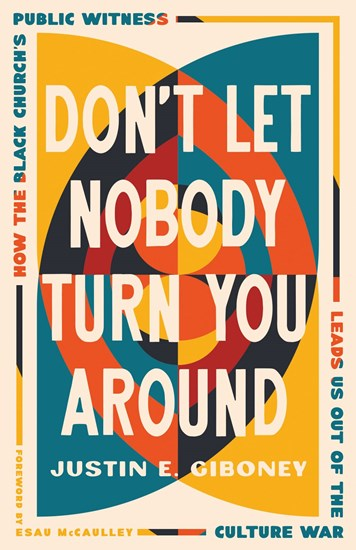
*Adapted from Don’t Let Nobody Turn You Around by Justin Giboney. ©2025 by Justin Giboney. Used by permission of InterVarsity Press. www.ivpress.com.
Ultimately, our duty in the sociopolitical arena isn’t to be the best Democrat or Republican we can be, but to glorify God by representing his justice and truth faithfully.
The truth is many Christians have trouble understanding politics and their own public witness outside of the culture war framework. Every decision with cultural or political implications seems like a choice between conservatism and progressivism, and in many cases, rather than considering the issues through the lens of biblical principles, we summarily follow one side or the other. But those culture war categories can limit us. We end up trying to define and evaluate our civic activity by measures and models that can’t capture the full brilliance of a gospel-centered witness. Like when applying a foreign standard of beauty to our physical features, we’ll never see ourselves as God intended, nor will we confidently exist in our calling on culture war terms. A Christian limited to the
boundaries of the ideological Left and Right has a distorted and fragmented witness.
Focusing on choosing the right position instead of choosing a side helps us avoid ideological capture. It allows us to center Christian principles and find common cause with others without having to pledge full allegiance or overlook wrongdoing. We can participate in party politics while having the independence to challenge and correct behavior and policy in conflict with truth and compassion.
When discussing works of the flesh, Paul mentions what the English Standard Version refers to as “rivalries” (Galatians 5:20). These are quarrels caused by self-seeking. They divert our eyes from what’s good and true, shifting our focus toward spiting those who stand in the way of us gaining worldly advantage. Preoccupied with antagonism and winning the argument, we devalue doing what’s right.
Loyalty to our ideological tribe can cause us to place the tribe’s interests, narratives, and rivalries above Christian principles. It becomes the center of our engagement, replacing the love and truth of Christ.
How have we allowed our rivalries to become the center of our public witness? The answer is we’ve become obsessed with proving our political opponents are completely evil, responsible for all societal wrongs, and must be humiliated. We’ve become opposition
centered. Through cable news, talk radio, and social media, we’ve come to believe our opponents are virtually incapable of sincerity and good works. Their every word and action are meant to either harm, deceive, or control us. They’re not just occasionally wrong—they’re always wrong, which means what’s right is found on the opposite side of their every belief and opinion. This is what I call opposition-centered engagement—forming our beliefs and selecting our positions based on a desire to create as much distance as possible between us and our opponents.
We’ve confused fighting those who we think are wrong with doing what’s right. Wrongdoers should be opposed, but we should never become evil to fight evil. We’re basing identity in the public square on who we dislike instead of the character and will of God.
Our opposition-centered posture also controls our opinions. For instance, we’ll reject a policy we would’ve otherwise supported if the policy is sponsored by a leader on the other side. For example, before Obamacare was Obamacare, Senator Mitt Romney proposed
a healthcare plan that was very similar to it (Jessica Taylor, “Mitt Romney Finally Takes Credit for Obamacare,” NPR, October 23, 2015). Romney himself said, “Without Romneycare, I don’t think we would have Obamacare.” Conservatives who were open to Romneycare outright opposed Obamacare. Instead of focusing on principles and solutions, our attitudes, behavior, and policy are suffering because we’ve centered
our opponents in our public witness.
Furthermore, much of our communication is meant to motivate our side through rage, fear, and contempt rather than persuade the other side. Some influencers appear to spend most of their time searching high and low for examples of other groups’ worst behavior—White women or “Karens” caught on video screaming false accusations, or Black men robbing old ladies. These displays serve to inflame the tensions by maintaining stereotypes and keeping us enraged, and the advent of social media has caused us to lose our sense of proximity and proportion. Consequently, all these things seem like they’re happening next door and every hour, even if the video is an isolated incident from across the country years ago.
The Bible says, “Everyone should be quick to listen, slow to speak and slow to become angry, because human anger does not produce the righteousness that God desires” (James 1:19‑20). Unfortunately, we’re slow to listen, quick to speak, and constantly infuriated by
our opposition. While Christians can be righteously indignant about injustice and immorality, a Christian shouldn’t stay in a state of rage. Among other things, when we’re enraged, we’re easily manipulated. There’s less room for a sound critique so we’re less
thoughtful, less constructive, and less compassionate. Again, the dynamic is aggravated by social media.
Our spiteful rivalries distort our values and lure us into intellectual dishonesty. When we’ve centered our contempt for opponents, we’re slower to speak truths that conflict with our side’s conclusions because we don’t want our opponents to win or get any credit. We’ll deny when the other side is right and find rationalizations for supporting our side when they’re wrong.
Even when the stakes were the highest, Frederick Douglass was willing to admit when his side was wrong. He even critiqued other abolitionists. His position was clear—he wanted slavery abolished. But he wasn’t so beholden to an abolitionist organization’s point of view that he was unwilling to disagree with them. He publicly disagreed with William Lloyd Garrison and the American Anti-Slavery Society about dissolving the union and opposing the US Constitution. Taking a position didn’t mean uncritically going along with all assertions of the group you agree with most. As a former slave, he had the moral imagination and courage to disagree with other abolitionists when they were wrong. He didn’t mute himself in fear that it’d be interpreted as a win for the pro-slavery side. He said what he believed was right. That takes an incredible amount of integrity and faith and that’s what cross-bearing in the public square demands.
The Bible also tells us doing right sometimes involves standing against the crowd and those with whom we share an identity and interests. Jesus made zealots and tax collectors abandon their associations to follow him (Luke 5:27‑28). Paul had to stand against his former circle once he saw the light and had to testify to the truth (Acts 23). Our public witness must clearly stake out the right positions and work toward the solutions that further our calling.
*Adapted from Don’t Let Nobody Turn You Around by Justin Giboney. ©2025 by Justin Giboney. Used by permission of InterVarsity Press. www.ivpress.com.
The views expressed in this blog are those of the author and do not necessarily reflect those of the Jude 3 Project. Content is for informational purposes only. Some posts may feature guest contributors. To inquire about writing for Jude 3, contact us at blog@jude3project.com.