
Apologetics in a World of Many Faiths
This blog is adapted from Humble Confidence by Benno van den Toren and Kang-San Tan.
Religious pluralism presents one of the main apologetic challenges in today’s world. This is now also true for the Western world, which—through the media and international migration—is confronted with the depth, vitality, and existential relevance of other religious traditions at a time when the Christian faith is waning and often suspect.
At one level, the experience of religious pluralism can undermine the credibility of any particular faith. At another, each religious tradition brings unique apologetic challenges to Christian witness. In secular societies, pluralism often leads to the belief that all religions are human inventions. In Hindu contexts, it may inspire the idea that there is a single divine mystery beyond all traditions, and that each person should simply remain within their inherited faith.
Religious pluralism intertwines closely with cultural pluralism, since belief systems shape cultures. Yet the two are not identical. A single faith can be expressed in many cultural forms—Southeast Asian Islam differs greatly from Arabic Islam, just as Christianity takes on varied cultural expressions across the globe. As religious pluralism gives rise to religious relativism (the claim that no one can make a universal truth claim), cultural pluralism produces cultural relativism (the claim that our truth is bound by our culture).
These challenges are not merely intellectual—they are deeply existential. Sociologist Peter Berger described this as the “vertigo of relativity.” When faced with countless worldviews, many people lose their footing and struggle to choose at all. Some react by withdrawing into ideological or religious fundamentalisms, seeking refuge from complexity rather than engaging it.
A further dimension complicates today’s apologetic landscape: the link between religion and power. Many in the West associate religious conviction with conflict and oppression. Historical and contemporary examples—from Northern Ireland to Myanmar—seem to confirm this suspicion. Consequently, apologetics and evangelism are sometimes dismissed as exercises in power rather than pursuits of truth.
Postmodern and postcolonial thinkers, following Michel Foucault, often deconstruct religious truth claims as veiled assertions of dominance. Yet from a Christian perspective, faith in a crucified Lord uniquely exposes false power plays. Christ’s humility and suffering reveal that truth can—and must—stand apart from manipulation or coercion.
In response, Christian apologetics must adapt both its method and its tone. The task is not to defend the faith with triumphalism, but to commend the truth of Christ with humility. This means attending to varied cultural contexts, engaging the whole person—mind, history, and community—and rejecting arguments rooted in political or cultural superiority.
Ultimately, the challenge is not just whether apologetics is effective, but whether it remains legitimate in a skeptical world. Can Christians still “give an account of the hope within them” without being dismissed as imperialistic? Can we claim the universal relevance of the gospel while acknowledging the limits of human understanding?
Faith’s answer is found not in dominance but in witness. Christians proclaim not their culture, but their crucified and risen Savior—the one who anchors truth beyond every shifting culture and calls all people to Himself.
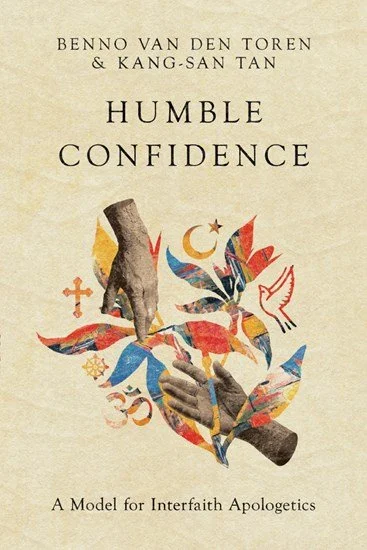
Adapted from Humble Confidence by Benno van den Toren and Kang-San Tan. ©2022 by Benno van den Toren and Kang-San Tan. Used by permission of InterVarsity Press. www.ivpress.com
To explore these ideas further, visit InterVarsity Press to learn more or purchase Humble Confidence by Benno van den Toren and Kang-San Tan.
The views expressed in this blog are those of the author and do not necessarily reflect those of the Jude 3 Project. Content is for informational purposes only. Some posts may feature guest contributors. To inquire about writing for Jude 3, contact us at blog@jude3project.com.