
13 Reasons for New Testament Reliability
Disciples of Jesus should have a desire to read Scripture (Jn. 8:31–32; 2 Tim. 3:16–17; etc.). As we read, some normal questions may arise as we want to more fully understand what we are reading. This is natural because we should want to know more about something we love. At the same time, many of us have seen the New Testament (NT) criticized, ridiculed, or dismissed by sceptics or media figures. NT reliability is an important issue for both disciples and doubters. But where do we begin?
One may start with a broad scholarly overview. Princeton professor James Charlesworth highlighted an area of consensus among scholars is that there is “considerable and reliable bedrock historical material in the Gospels.” He stressed that the consensus on this point has “far too many international authorities to mention,” with each of them “independently, recognizing that in its broad outline the Gospels’ account of Jesus is substantially reliable and true.” These comments may seem quite remarkable to both believers and nonbelievers alike!
There are thirteen different reasons why the NT is trustworthy and reliable in several ways and at different levels. These arguments may be compared to looking at a map. Sometimes you need to zoom out to make sure you are in the right area. Other times, you need to zoom in to see specific details better. Here, we want to briefly identify just four reasons the NT is trustworthy. After this, we will ask whether the NT is outdated or if it remains relevant in our lives today.
Textual Evidence
Since we do not have the original NT texts, can we be confident that what we have accurately reflects what was said in the originals? At the outset, we should note that for virtually every ancient text, no original copies exist. So this isn’t just a question for the NT, but one for Plato, Josephus, Tacitus, and others from antiquity. When it comes to the NT, we can be entirely confident that the words in the New Testament are those that were originally written. How? When compared to other ancient texts, like Plato, the NT is preserved by more manuscripts than any other ancient writing. There are 5,000+ copies of the NT in the Greek alone and over tens of thousands when other languages are included! Among all these copies, the overwhelming majority of differences are spelling/grammar mistakes (the copyists were human after all!). None of the essential Christian doctrines are affected, and most Bibles identify textual issues in footnotes.
New Testament Genres
We all know the difference between a Star Wars movie and a news report about a NASA mission. Their genre guides our interpretation. We do not view Star Wars as a historical report precisely because we know it is a fiction. When it comes to the NT, it is widely accepted that the Gospels are Greco-Roman biographies. Biographies were not expected to freely invent materials like novels could, but were expected to be reports about an individual’s life. When it comes to Paul’s writings, the in-house discussions are not considered to be forms of propaganda since they were written to those who already believed. The textual evidence and genres provide us with broad, “zoomed out” levels of reliability. They are precisely the things we would want from our sources.
Historical Criteria
What convinces a historian that a specific event occurred? Historical criteria are often used to evaluate the historicity of an event. These criteria are very intuitive and many of us use versions of them today. They include things like multiple attestation, embarrassing testimony, and contextual credibility. Several key events in the New Testament meet multiple historical criteria. Jesus’ death on a cross is one of the best-attested events in Jesus’ life precisely because it is multiply attested (reported in several independent sources) and contextually credible. It is also highly embarrassing and not the sort of thing that the disciples would have invented. In fact, Paul points out that the cross is a stumbling block to the Jews and foolishness to the Gentiles (1 Cor. 1:23). While there are more reasons still, this gives us an idea of how historical criteria add to the historicity of an event.
Undesigned Coincidences
When two independent reports illuminate each other in ways that appear to be undesigned or unintentional, this can add to the likelihood of an event’s occurrence. Undesigned coincidences are like puzzle pieces that come together to help illuminate a bigger picture of a particular event, and there are a number of these in the NT. An example of an undesigned coincidence can be found by asking why Mark 15:21 refers to Simon of Cyrene (who carried Jesus’ cross) as the father of Alexander and Rufus? Why include his sons? Interestingly, Paul greets Rufus as a member of the Roman (Rom. 16:13). Coincidentally, Mark often thought to have been written in…Rome. Mark’s saying is further clarified by Paul’s reference to Rufus, and it is highly unlikely that these two were corroborating with one another to concoct a story about Rufus being Alexander’s son!
Cumulatively, these four considerations provide a helpful starting point for the reliability of the NT. Several other lines of evidence all provide additional angles and levels of reliability, such as:
NT Authorship
NT Dating
Oral Traditions/Creeds in the NT
Archaeological Discoveries
Non-Christian Sources
Early Christian Sources Outside the Bible
Development of the NT Canon
Spiritual/Life Transformations
Minimal Facts Approach
Being ready to answer the question of reliability is important in the context of evangelism, but it is also relevant to ministering to those who are doubting. Similarly, disciples who are seeking to grow in their faith and understanding of the NT will be helped by familiarizing themselves with some of these points above.
Outdated?
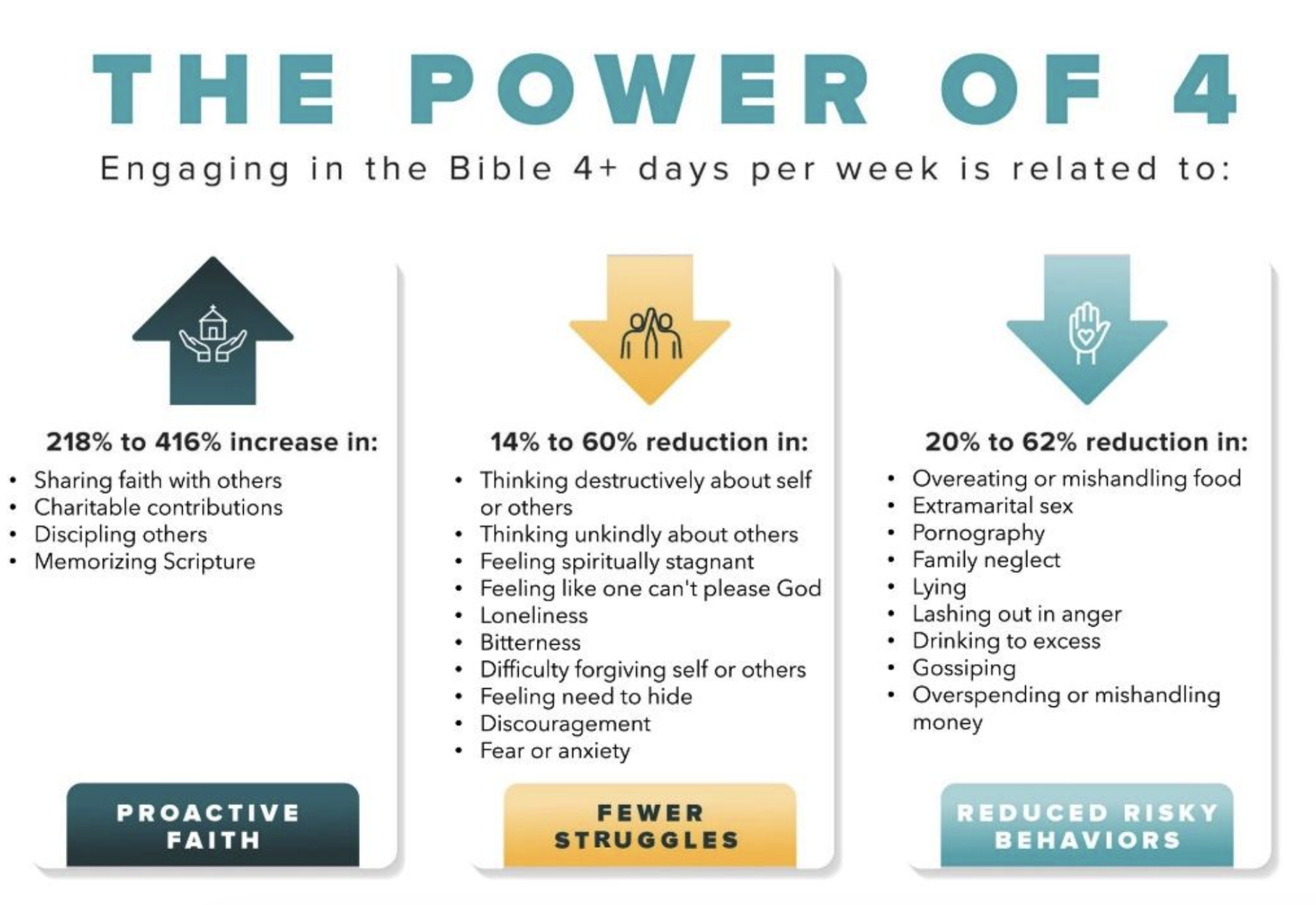
With this in mind, we can ask whether the Bible is outdated. To answer this, we will simply point to research from The Center for Biblical Engagement. They conducted a massive study on those who read their Bible just four times a week. Some of their results are provided in the illustration below. To this author, it is a powerful demonstration of Scripture to transform and renew minds as it remains living and active in the lives of people today!
Romans 12:2 And do not be conformed to this world, but be transformed by the renewing of your mind, so that you may prove what the will of God is, that which is good and acceptable and perfect.
Hebrews 4:12 For the word of God is living and active and sharper than any two-edged sword, and piercing as far as the division of soul and spirit, of both joints and marrow, and able to judge the thoughts and intentions of the heart.
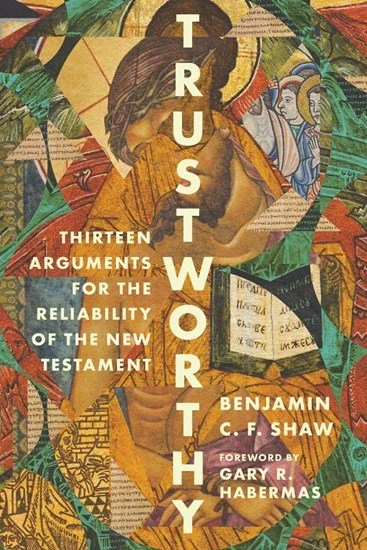

Benjamin C. F. Shaw (PhD, Liberty) is president of Core Apologetics. He also serves as adjunct professor of theology at Liberty University and affiliate faculty member of Colorado Christian University. He has been working with Dr. Gary R. Habermas for over a decade to collaborate in philosophical, historical, and theological research and publishing. Shaw is the author of Trustworthy:
Thirteen Arguments for the Reliability of the New Testament.
1. James H. Charlesworth, “Jesus Research Expands with Chaotic Creativity,” in Images of Jesus Today, ed. James H. Charlesworth and Walter P. Weaver (Valley Forge, PA: Trinity Press International, 1994), 5-7 (emphasis added).
2. https://www.centerforbibleengagement.org/research
The views expressed in this blog are those of the author and do not necessarily reflect those of the Jude 3 Project. Content is for informational purposes only. Some posts may feature guest contributors. To inquire about writing for Jude 3, contact us at blog@jude3project.com.